There are many ways to measure the levels of social and economic inequities in a diverse country like Nepal. The National Census, together with other livelihood-related measurements certainly offers a holistic portrayal that captures some of the inequalities among the different ethnic and social groups living in a nation.
Data from the education and health sectors, likewise, do also provide a glimpse of the disparities existing in the wider society where centuries of marginalization and discrimination or culturally and religiously entrenched privileges are still marking the life trajectory of a child.
Could a look at the rate of juvenile delinquency across the different communities that make up the fabric of Nepal also represent another type of indicator that, perhaps, even if it is raw, crude and imprecise, represents a mirror of the country?
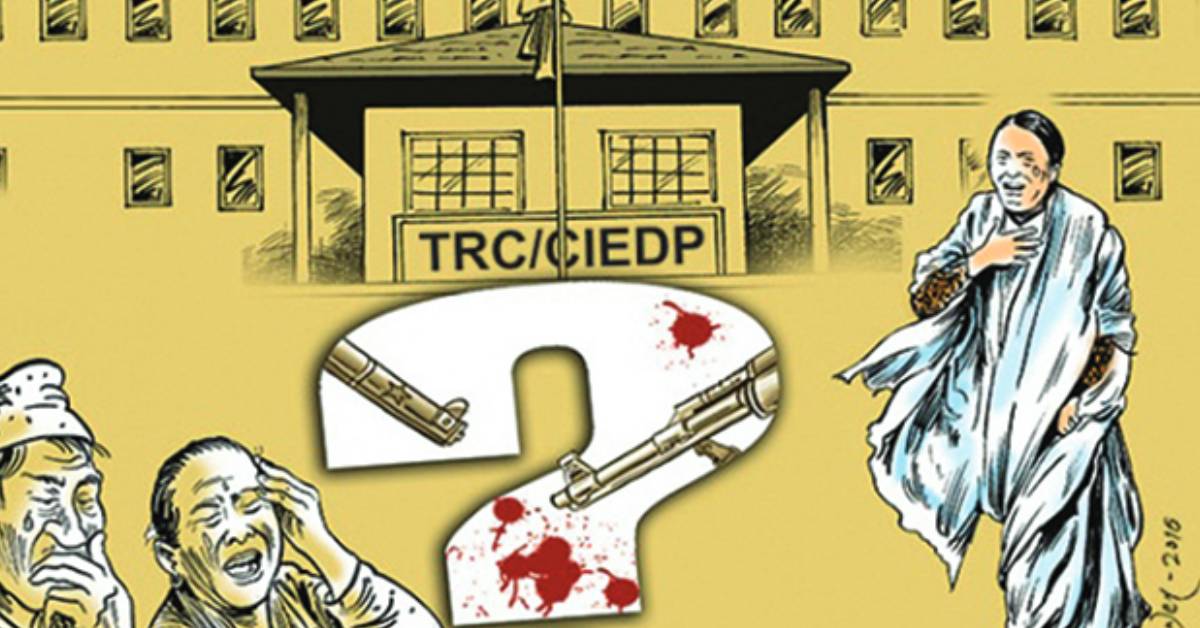
The recent incidents inside Bhaktapur Juvenile Correction Home are not particularly shocking considering that, periodically, there have been spells of violence in such facilities across the country. While this first raises questions of if and how these corrections homes are ‘correcting’ the children or just locking them inside, there are many layers of realities that tend to uncover.
And as expected, all the time such instances of brutality occur, the government makes new pledges that are never fulfilled. Instead, what is more remarkable is the fact that a vast majority of children and youths inside these correctional facilities belong to groups who have been historically marginalized and discriminated against, and they still lie on the margins. More than 80 percent of them have dropped out from their schools because of familial or socio-economic reasons. While one can blame these children or youths for not completing their studies, a flipside question is: what is the problem in the children or the system that failed to retain them in the schools? Were they taught in inclusive ways so that they could learn, such as through the language that they spoke in their families?
In other terms, before these children and youth reached the courts for legal justice, many of them had faced justice or injustice way back during their childhood in their schools and classrooms. When articles and general commentaries focus on the aspirations of the so-called Gen Z, are we perhaps forgetting those youths who never imagined the possibility of marching for their rights because their life circumstances never allowed them to think and act beyond their day-to-day survival?
Fixing the status of the correctional system in Nepal and turning the correctional facilities at its center into real hubs of personal transformation, self-empowerment, regeneration certainly cannot be achieved with the usual quick fixes. Although the real correction is yet to be evidently seen in these ‘correctional homes’, it is already clear that these could be sites where correctional measures could be undertaken in a way that addressed the deeper structures of why injustices happen in the first place.
What is, without doubt, a daunting task requires instead a truly holistic approach that starts right at the beginning of a child’s personal growth where the state it is constitutionally mandated not only to educate all children but also offer them a chance to thrive in their lives with proper education. This is because schools should be the venues that instill something deeper than theoretical learning from the textbooks.
The centers of learning, especially those run by the state, should be seen as platforms where all children, regardless of their social and economic status, are able to acquire a sense of belonging and a sense of inclusion. That inclusion is another name for justice.
They should be venues where children, especially from the most marginalized communities, build their self-confidence and can optimistically look at the future with a sense of hope. Justice begins in the classrooms and communities, much before the courts. Yet one of the biggest obstacles to make schools into laboratories of social inclusion and social mobility, remains the absence of teaching in native languages different from Nepali, languages that are spoken by millions of children belonging to non-traditionally dominant communities.
On this issue, some improvements have also been made, thanks to the power that local governments now hold in the realm of education, especially at the primary level. Yet, most of these changes have not been mainstreamed; they are not made part of a system that still remains far too centralized.
Therefore, instead of providing a fertile ground to inspire children from vulnerable and marginalized communities to build their self-esteem and confidence, schools often end up doing the opposite. They help entrench the same unequal patterns that are so present in society.
Imagine a child from an Indigenous community, a child whose father is an alcoholic and whose mother ran away. She lives with an uncle whose income is barely enough to meet his own family’s needs, and therefore education is far from being a priority. In addition, there is a high chance that this child is forced to study in textbooks in a language that is not hers, and she has to interact with teachers in a language different from her own. Essentially, she goes to school, but learning is yet to happen.
What will be the odds of this child becoming a lawyer, doctor, or engineer, or finding employment in a bank? The chances of this child prospering in life and undertaking fulfilling jobs are much lower.
While this scenario might be criticized as the usual typecasting that further enhances stigmas and biases that become glued to thinking of certain communities, we should wonder why there are higher rates of dropouts in certain communities than others.
According to a recent article from The Rising Nepal, a new report published by the National Statistics Office, titled “Education and Inclusion in Nepal”, found that the highest number of children who drop out of the school system are from geographically remote districts and marginalized communities. That’s why the process of shaping a more equitable society starts in the classroom. Undoubtedly, these are the best places to build a more inclusive and just nation that welcomes the diversity that makes Nepal such a unique place.
Instead, in many ways, students from marginalized communities are judged for not belonging to the conventional, mainstream culture that has been forged throughout history, through a hierarchy that denied members of many communities their most fundamental rights. Addressing these long-standing patterns of exclusions that often have been internalized and normalized by the wider society will require a serious effort by policymakers. Will the parties vying for power in the elections also decide to get serious about eradicating social exclusion through a holistic and inclusive process of policymaking that can go to the core of this issue? Will the many languages that are only national on paper also be made a central part of a new process of nation-building that is founded on equity, inclusion, and diversity rather than ethnocentric views, exclusion, and further marginalization?
We are aware that fixing the educational sector and transforming it by harnessing the diversity of Nepal will not happen overnight. Investing in inclusive education does not offer a magical silver bullet that can fix all the forms and consequences of social exclusions that are manifested throughout the system, including in the juvenile correctional system.
Yet millions of people, especially many youths who ended up accepting traditional forms of exclusion and paying, directly and indirectly, the consequences of it, should have the right to take a different path in life.
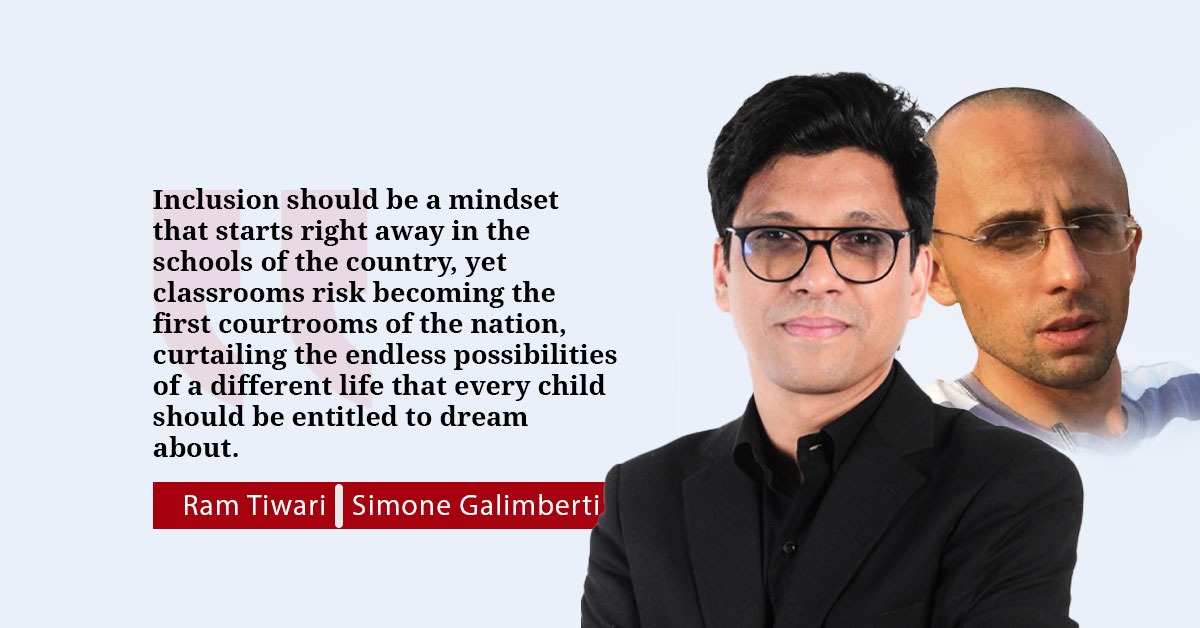
Inclusion should be a mindset that starts right away in the schools of the country. Classrooms, instead, risk becoming the first courtrooms of the nation. Rather than becoming beacons to help children from vulnerable communities to initiate their process of self-empowerment and self-confidence, they are places that curtail the endless possibilities of a different life that every single child should be entitled to dream about.
We do know that the hypothetical case we described above about a child from a difficult family situation belonging to a marginalized group is, after all, not at all so imaginary.
While poverty and deprivation can be found across all the groups, including members of the so-called traditionally dominant groups, it is undeniable that many children from certain communities are predominantly those who end up serving our expensive coffees or driving dangerous old buses or building our houses, or working as laborers in the Gulf.
Why do members of certain groups have access to such limited opportunities? Why are these jobs “fit” mostly only for certain youths? Can the same youths think about “options” or simply should continue to resign themselves to a day-by-day survival based only on their own hard work that most of the time is discounted and never appreciated?
The political parties competing for elections should offer a clear vision with real commitment to change this status quo. Offering millions of youths a different life trajectory is not impossible. But intentions about doing this should be clear by now. As much as century-old patterns of exclusion were not accidental and were the result of a discriminatory system designed to marginalize certain groups, it is possible to rethink the whole structure of society and offer millions of children different life prospects.
What counts will not only be tokenistic commitments in the parties’ manifesto but also an enduring, long-term effort centered on effective and inclusive policy making that many, in jargon, call good governance. Indeed, only inclusive good governance can make Nepal one of the most fascinating diversity labs in the world. This is how Nepal can become a nation where juvenile institutions will be no more places packed with the same familiar faces and actually be venues able to offer a real chance to amend and where schools can boost all children’s hopes of being able, one day, to do something great in life.
Ram Tiwari is the Founder of Nepal Forum for Restorative Justice and Director of Inclusive Education Nepal
Simone Galimberti is the Pro Bono co-founder of ENGAGE and The Good Leadership. https://english.nepalnews.com/s/opinion/justice-begins-in-classrooms-not-courts/