Education that includes every child is not idealism. It is the most practical thing a school can do.
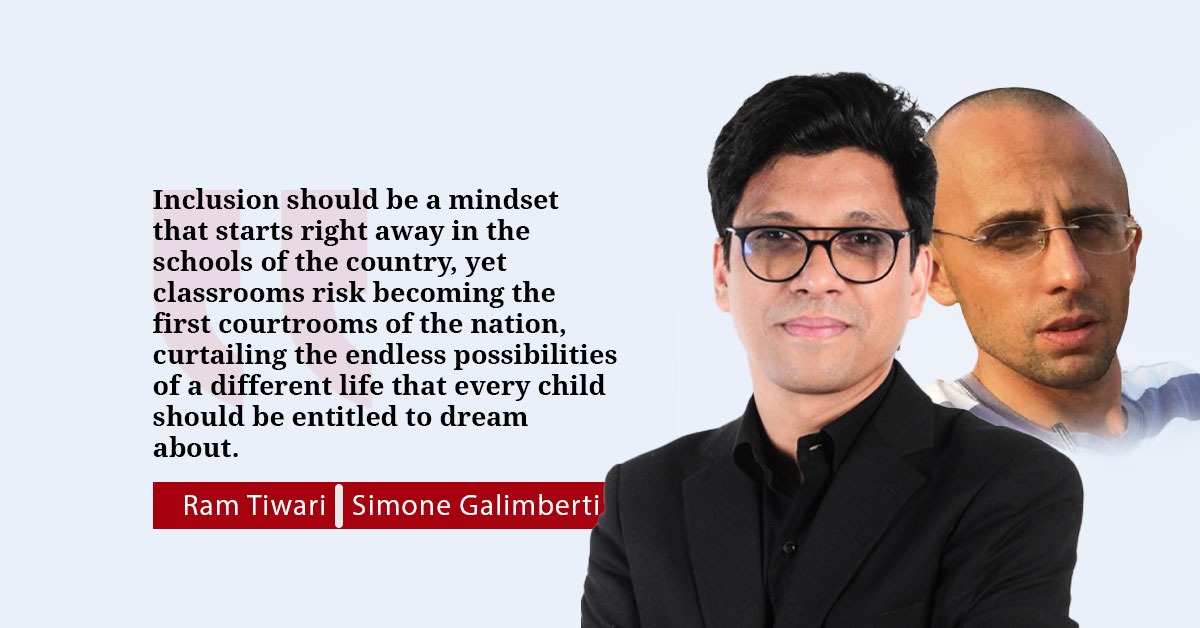
Nepal’s classrooms tell a story most education systems prefer not to hear. Children with disabilities, learning differences, and marginalized backgrounds are still told, in various ways, that school was not built for them. Ram Tiwari’s work in inclusive education starts from a single conviction: the problem is never the child. The problem is the design.
As the founder of Inclusive Education Nepal (IEN) and a Harvard-certified UDL Practitioner, Ram works at the intersection of policy, pedagogy, and practice. His approach draws on Universal Design for Learning (UDL), a framework that anticipates the diversity of learners from the start, rather than retrofitting support after children have already fallen behind. His book “Inclusive Education: Myths and Realities” (2025), the first of its kind in Nepali, directly challenges the assumptions that keep children out: that segregation is protective, that disability is a personal misfortune, and that mainstream schooling is something to be earned.
This work does not stop at the classroom door. Ram engages governments, teacher-training institutions, and civil society organizations to shift policy frameworks from charity-based models of disability to rights-based models of participation.
- 150+ schools engaged in inclusive education and safeguarding initiatives
- First Nepali-language inclusive education textbook authored and published (2025)
- UDL-based teacher training programs designed and delivered across Nepal
- National directory of disability support services developed
- Visiting Faculty at Kathmandu University School of Education (2025)
- Active policy advocacy with government bodies and disability organizations for systemic reform
Punishment tells people what they cannot do. Restorative justice asks what needs to be repaired.
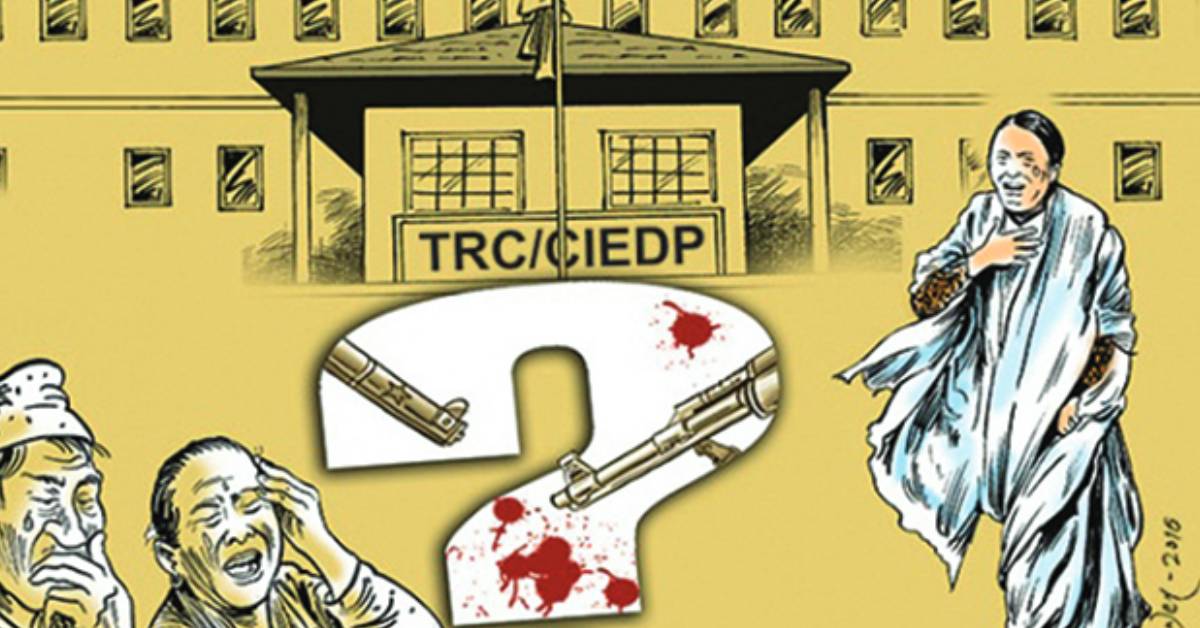
When Nepal’s courts and communities were left to handle the aftermath of a decade-long armed conflict, the question of justice took on an urgency that conventional legal frameworks were not built for. Ram Tiwari entered this space as a lawyer, a certified mediator, and a scholar with a specific conviction: that healing and accountability are not opposites, and that communities have a right to participate in the processes that affect them most.
As the founder and Executive Director of the Nepal Forum for Restorative Justice (NFRJ), Ram designed and led Nepal’s first restorative justice programs in partnership with the judiciary. In a legal system built almost entirely around adversarial processes, this was a landmark departure. He has trained lawyers, judges, police officers, and social justice workers across the country. His published works include several books on restorative justice in the Nepali context, a national training manual for justice sector workers, and a co-authored chapter in a Springer volume on comparative restorative justice across India, Nepal, and Bangladesh.
Internationally, his contributions carry equal weight. He was nominated to the U.S. Department of Justice’s Office of Juvenile Justice and Delinquency Prevention (OJJDP) Restorative Justice Working Group, and served on the Expert Committee of the United Nations Office on Drugs and Crime (UNODC) in the revision of the UN Handbook on Restorative Justice. He has delivered trainings for UNDP Somalia and presented at restorative justice conferences across Asia, South Asia, and the United States.
- Founded Nepal’s first dedicated restorative justice organization (NFRJ, 2016)
- Designed Nepal’s first restorative justice programs in partnership with the judiciary
- Expert contributor to the UNODC Handbook on Restorative Justice (United Nations)
- Nominated member, U.S. DOJ/OJJDP Restorative Justice Working Group
- South Asia Programme Manager, International Commission of Jurists (2021 to 2023)
- Multiple books published on restorative justice, including training manuals for justice sector workers
- Robert Bosch Fellowship recipient (Germany, 2018
Safety in schools is not a policy checkbox. It is the precondition for everything else.
A child who is afraid cannot learn. A child who has been harmed and received no response cannot trust. Ram Tiwari’s approach to safeguarding begins with these two truths and builds outward from them, to the structures, relationships, and institutional cultures that either protect children or fail to.
His work connects safeguarding directly to inclusion. The children most vulnerable to abuse, exploitation, and neglect are often the same children excluded from the center of school life: children with disabilities, those from marginalized castes or communities, and those living in post-conflict environments. Safeguarding, in this framework, is not a separate department or an annual training. It is woven into how classrooms are designed, how teachers are trained, and how schools relate to the families and communities around them.
Through Inclusive Education Nepal, Ram has worked with schools across Nepal to develop safeguarding systems grounded in child rights, restorative approaches, and UDL principles. His training work on punishment-free classroom management directly addresses one of the most persistent safeguarding failures in South Asian schools: the normalization of physical punishment and public humiliation as tools of discipline, both of which research consistently links to dropout, disengagement, and long-term harm.
- Safeguarding and child protection programs implemented across 150+ schools
- Punishment-free classroom management frameworks developed and trained
- Research conducted on marginalization and schooling in post-conflict Nepal (Rukum and Rolpa)
- Child protection integrated into inclusive education programs at the systems level
- Teacher training materials developed on recognizing and responding to harm in school settings
Peace is not the absence of conflict. It is the presence of relationships strong enough to survive it.
Nepal’s transition from a decade-long armed conflict toward a functioning democracy has depended on thousands of small conversations that rarely make headlines: between communities and former combatants, between families divided by violence, between institutions that distrust each other and citizens who have stopped trusting institutions entirely. Ram Tiwari has spent a significant part of his career building the conditions for those conversations.
As National Coordinator of the Nepal Dialogues Initiative, as a circle facilitator for community peace committees, and as a researcher who has mapped Nepal’s dialogue and peacebuilding landscape for GIZ and other international partners, Ram brings both methodological depth and ground-level understanding to this work. His MA in Conflict, Peace and Development Studies gives him a theoretical foundation. His years in the field give him something theory cannot: knowledge of what actually works when people who have harmed each other are asked to sit in the same room.
His book “Dialogues and Restorative Justice in Nepal” (2023) draws on this experience directly. It documents how restorative circles, when properly facilitated, can move communities from punishment-seeking to meaning-making, and from isolation to collective accountability. He has taken this work internationally, presenting at human rights forums in Bangladesh, a restorative justice conference in Singapore, and peacebuilding forums in the United States.
- National Coordinator, Nepal Dialogues Initiative (2021 to 2025)
- Circle facilitator for community peace committees across Nepal
- Dialogue and peacebuilding policy mapping completed for GIZ Nepal (2023 to 2024)
- “Dialogues and Restorative Justice in Nepal” published (2023)
- International presentations on restorative peacebuilding in Bangladesh, Singapore, and the USA
- Expert training delivered for UNDP Somalia’s Joint Justice Programme on peacebuilding and transitional justice (2020)
- Robert Bosch Fellowship recipient, Berlin Seminar on Truth, Justice and Remembrance, Germany (2018)