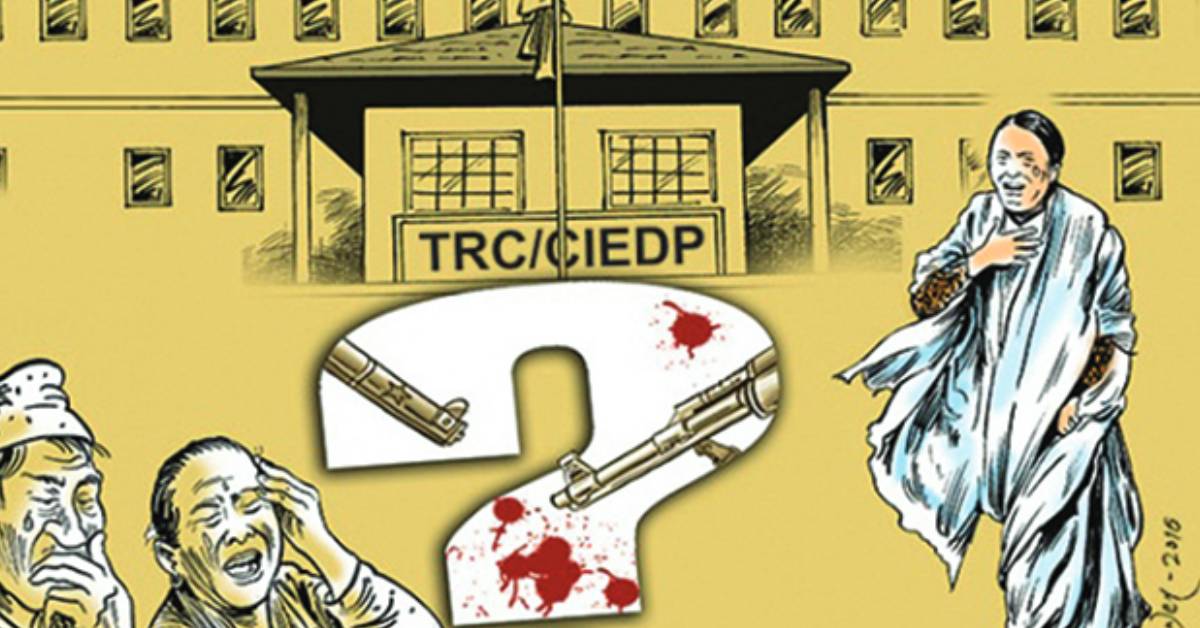
Transitional justice remains one of the thorniest issues that Nepal has been trying to tackle since the signing of the peace agreement in 2007. On August a breakthrough was reached when the three major political parties had reached a consensus on a long awaited national transitional legislation.
Even though Amnesty International had defined it as a flawed step forward, after years of endless political shenanigans that exasperated the thousands of citizens who had been seeking justice, it finally seemed that the peace process could reach its final phase. Yet, the latest incarnation of Selection Commission in charge of identifying the members of both the Truth and Reconciliation Commission and Commission of Investigation on Enforced Disappeared proved, once again, incapable of carrying out its mandate. It is still unclear how the situation will be unblocked.
Let’s not forget that the process of transitional justice should be about accountability but also reconciliation and healing. Can a new approach to this process make the difference and unite the whole country by undertaking a holistic process of national healing that goes deep to the root causes of the conflict? The concept of restorative justice offers a powerful set of principles that, if applied, could radically change not only the frames through which the civil war has been debated so far but also help transform the society.
The system in which we live and our mindsets that shape them have been consistently based on an idea of justice centered on persecution and punishment. Anyone committing crimes, not only those with long lasting damages and sufferance on the victims but also those of pettier nature, must be held accountable. It is possible to do so without giving up on the hope that the perpetrators can undertake a process of personal transformation and become better human beings. At the same time, the victims can find closure in their pursuit of justice not only through punishment of the former but through a process of healing.
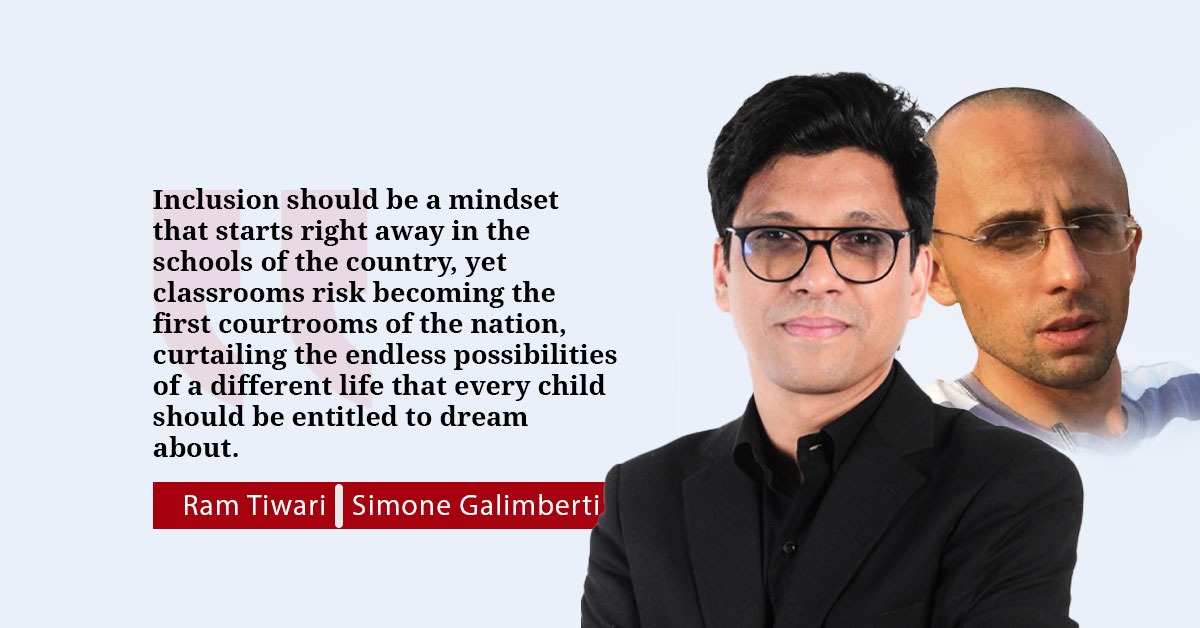
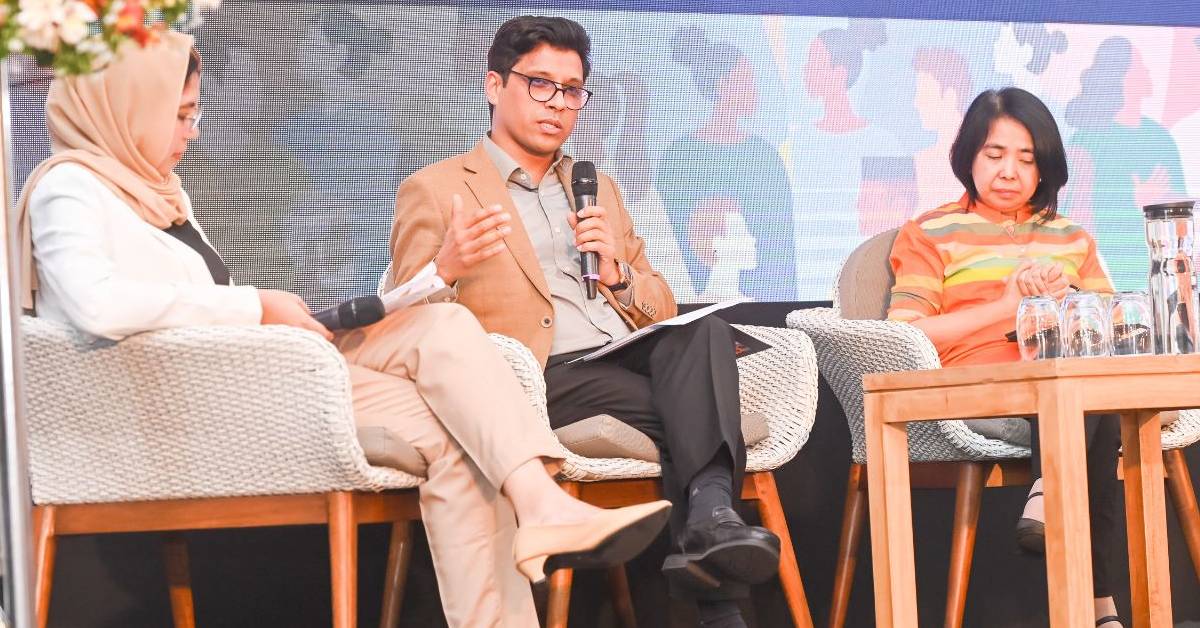
Interestingly, Nepal is at the vanguard of incorporating restorative justice within its legal judicial system. To better understand what has been done in the country in this crucial area, I interviewed with Ram Tiwari, one of the most prominent experts on the issue in the South Asia and beyond.
Tiwari who is the Founder and Executive Director of the Nepal Forum for Restorative Justice, walked me through the key concepts of restorative justice and how its application in a variety of field.
History of restorative justice in Nepal
I started my interaction with him by asking when restorative justice was initiated in Nepal.
“In 2014 there was a South Asian regional forum with Supreme Court Justices from throughout the region. It was noticeable that the attitudes of Nepal’s Justices attending the proceeding was very positive to the ideas and principles of restorative justice.”
“Since then,” Tiwari continued, “we made strides as important progress was made since when we started”.
“Now we have three legislations on restorative justice that were enacted in 2018, 2021 and 2023 respectively and for example now, at least on the paper, the whole juvenile justice system incorporates, in principle, key aspects of restorative justice”.
“The challenge ahead is in the implementation”, Tiwari explained. “Moreover”, Tiwari further said, “a new set of legislation, the Restorative Justice Procedures is set to be finalized by May 2025 at the latest. Approving these regulations is going to be paramount because it could strengthen the whole judicial system of the country. “The Directives on Restorative Justice Procedures, is going to be the most comprehensive national document on restorative justice in Nepal”, Tiwari shared.
But how could restorative justice mark a drastic difference from the current practices?
It’s about seeking truth
“The current system does not reward the truth, the deep causes that led to the perpetuation of offenses and the consequent suffering and traumas that still affect the survivors of alleged crimes and their families” according to Tiwari.
“Restorative justice is already well understood and, at least partially, internalized within the judiciary but we are not yet marking turning point, making the whole justice system much more victim centric”.
Restorative practices would offer opportunities for the perpetrators to come to terms with their misdeeds by facing the root causes of their actions while also attempting to reconcile with the victims.
The potential of restorative justice is huge if you think about it but it is essential to acknowledge that Nepal is living a paradox.
On one hand, the nation is well positioned to bring change to the whole judicial system by incorporating restorative justice; on the other hand though, the same principles struggle to gain traction.
One of the problems according to Tiwari is that too often in Nepal some of the key concepts of the process of restorative justice are misunderstood.
“If we really want to embed restorative justice within Nepal’s transitional peace process, then we need to demystify several aspects that have been persistently proposed in the domestic arena when we talk about bringing to a real end the peace process”.
Getting reconciliation right
For example, reconciliation that is central to the whole restorative justice approach, is misinterpreted. “There is a misunderstood grasp on what reconciliation really is and its implications”, Tiwari explains.
“Reconciliation is often thought in terms of mediation and this can be problematic. There are certainly linkages between the two but it is essential to distinguish them also because in Nepal mediation has its own separate legislation” Tiwari explained.
“Second, when we talk about persecution, the whole focus is on the offender and the ways this person has to pay for the damage created”.
Persecution can be effective only in the prospective of reconciliation, if victims and offenders alike can have a chance to recount their stories and express their emotions in what should be a joint healing process.
“We need to unpack these key elements and we need to seriously go beyond the traditional narratives surrounding them”.
Third, reparations are often thought only in terms of money relief. This is incorrect as it is just a very narrow view.
“When we talk about reparations, immediately the debate is centered on financial aspects,” he told me. Instead, reparations should be framed in much wider terms and more holistically because monetary compensations won’t just alone heal the traumas and the injustices faced by a victim and her family. Tiwari realized that truly embedding transformative justice in the ways the current system work will require a paradigm shift. “Yet we need really to be bold in our thinking and yes, we really have to re-imagine our justice”.
According to him, restorative justice has the power to truly reframe the whole conversation about transitional justice. Tiwari explained: “Restorative justice can truly bring hope that both the harmed one and the culprits can re-set their lives anew. Obviously, it is not easy and such approach will require a whole holistic approach”. It does not mean, he clarifies, that such process of interpersonal reconciliation will be based on forging or re-establishing a relationship between offender and victim at any cost. Forgiveness, after all, he added, is always pursued in a true process of restorative justice even though it is not always achieved.